Last week I had the opportunity to sit down with Kathryn Tosney a university lecturer who decided in her later career to focus on studying Iguanas. Many people know very little about the iguanas perhaps they know that Darwin described them as “hideous” and “disgustingly clumsy” but for Tosney they have become a focal point in her career. Visiting the Galapagos three times a year she is continuing to assist in the creation of a successful conservation program to ensure the long-term success of the Iguana population for years to come. Speaking with Tosney made me realise how little I know about the wildlife of the Galapagos, despite having read endless articles watched David Attenborough and spoken with the galapagos guides. For this weeks post I have decided to focus on the top 10 wildlife present on Isabela. During a single day on Isabela there is a strong possibility that you will see many of the following whilst some of them you may need to go out to look for specifically.
- Galapagos Giant Tortoise – Weighing up to 250kg the Galapagos Giant Tortoise is one of the largest living species and an icon of the archipelago. Islands like Isabela which have a more tropical climate have bigger tortoises with dome-shaped shells and the drier islands have smaller tortoises with saddleback shaped shells.
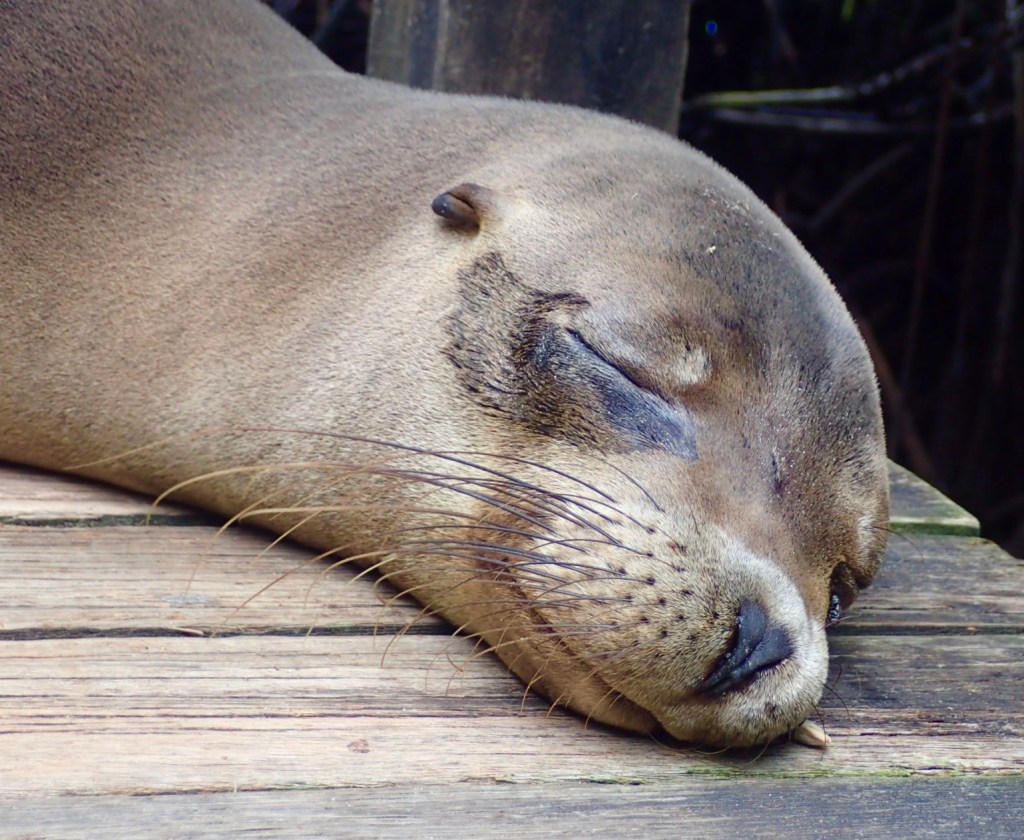
- Galapagos Sea Lion – A subspecies of the sea lion, they can be seen lazing on the beaches, at the dock of the local lagoon – they are known to be inquisitive and approach swimmers. Sea lions can dive up to 600meters and stay underwater for around 10 minutes .
- Marine Iguanas – The worlds only sea going lizards, marine iguanas exhibit extra ordinary marine adaptations. They have short noses, small teeth and a unique gland to get rid of excess salt from their blood flow. Their dark skin also helps protect against strong heat from the sun. Iguanas begin nesting in February and on the beach, in Puerto Villamil you will find a fenced of site which is being kept for the Iguanas to use for nesting. This is one of the most popular sites on Isabela and its common to see females that have walked about 2.2km to get there. Isabela has one of the biggest populations of Iguanas and this specific site is very perfect for preserving the baby iguanas.
- Galapagos Penguin – A prime example of adaptation – the Galapagos penguin’s are the smallest and rarest of the penguin species. They prefer cold water, and form colonies in cracks and caves around the island. Fast and agile swimmers the Galapagos Penguin propels themselves through the water at speeds of 40km per hours. It is possible to see the Galapagos Penguin on Isabela when you go snorkelling at the local lagoon Concha de Perla.
- Green Sea Turtle – The only turtle species to regularly nest on the islands. They are smaller than other green turtle species and have a darker shell. Large front flippers and a smooth shell help them to swim with ease through the water. Assisting the National Park students from the University of Miami are monitoring the beaches every night to look for signs of turtle nesting along one of Isabela’s beaches.
- Darwin’s Finches -Famously inspiring Darwin’s evolutionary theories, these birds are an iconic resident of the archipelago. They have black-brown feathers with short wings and a short tail. Darwin was interested in how each bird was perfectly adapted to the demands of each island.
- Blue Footed Booby – Between May and July blue-footed boobies perform a comical mating dance during which males will show off their blue feet by strutting and moving their feet in quick up-and-down movements. The brighter the shade of blue the more interested females will be.
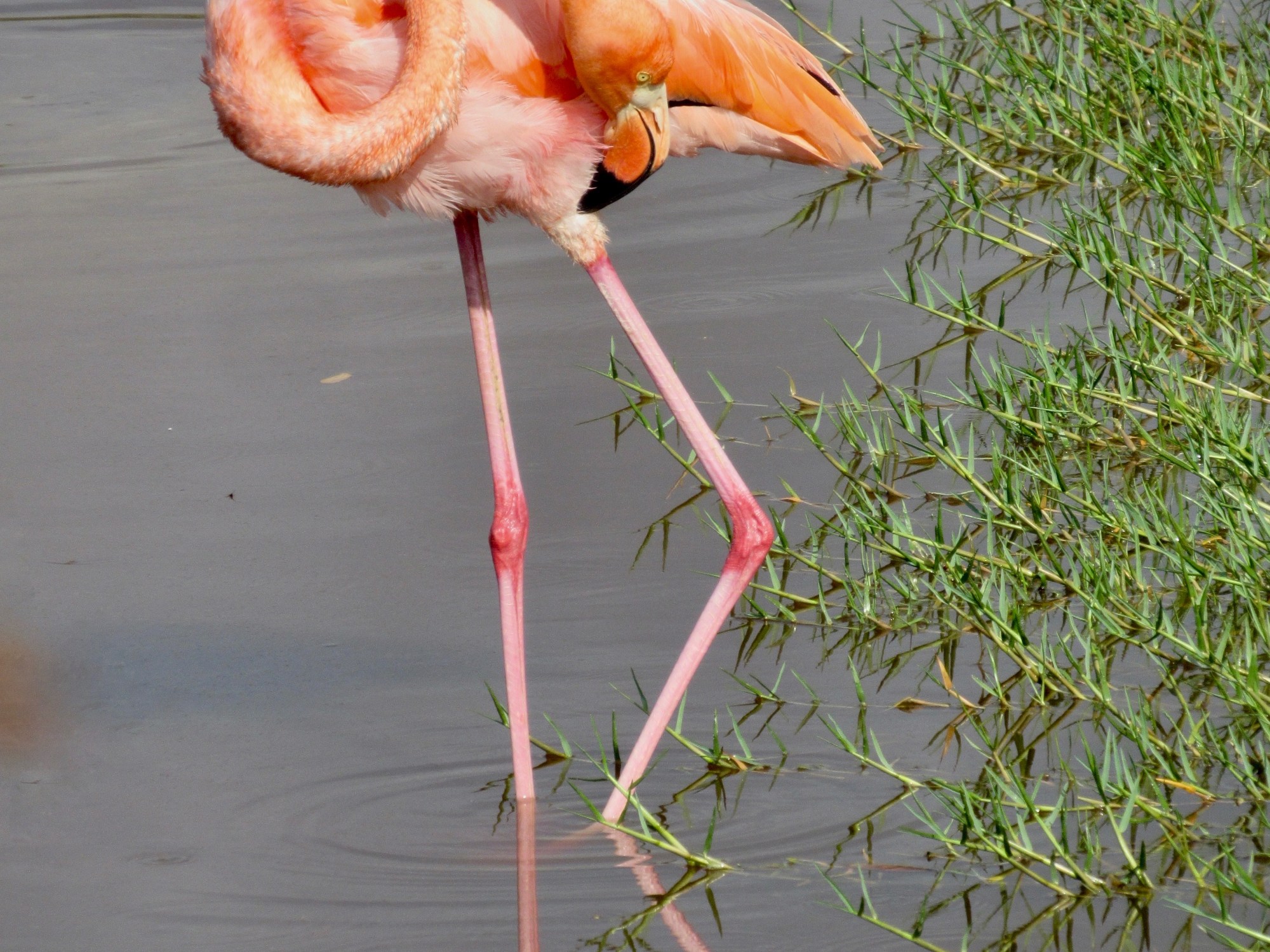
- Flamingos – The bright pink feathers of the Flamingo are a result of a carotene-rich diet (mainly crustaceans). It feeds by filtering large quantities of food through a special filter called the lamellae. They are one of the largest birds in the Galapagos, and measure to nearly 2 meters tall. You can see the flamingos on the walk along the broad-walk to the tortoise centre.
- Flightless Cormorant – The rarest and largest species of the cormorant family, they rely on diving to catch prey, with webbed feet and strong legs to propel them through ocean waters. The upper parts of the flightless cormorant are black and the underparts are brown with turquoise eyes and a long beak hooked at the tip.
- Bottlenose Dolphin – Bottlenose dolphins are the most common and well known member of the dolphin family. They have a short nose and sleek body with curved dorsal fin. They are grey in colour, dark near the dorsal fin and paler at the underside.
It is safe to say that visiting Isabela means you will see plenty of wildlife. No matter when you want to volunteer with the IOI you are in for a treat, as every month brings something new on the Island.
 Georgia In The Jungle