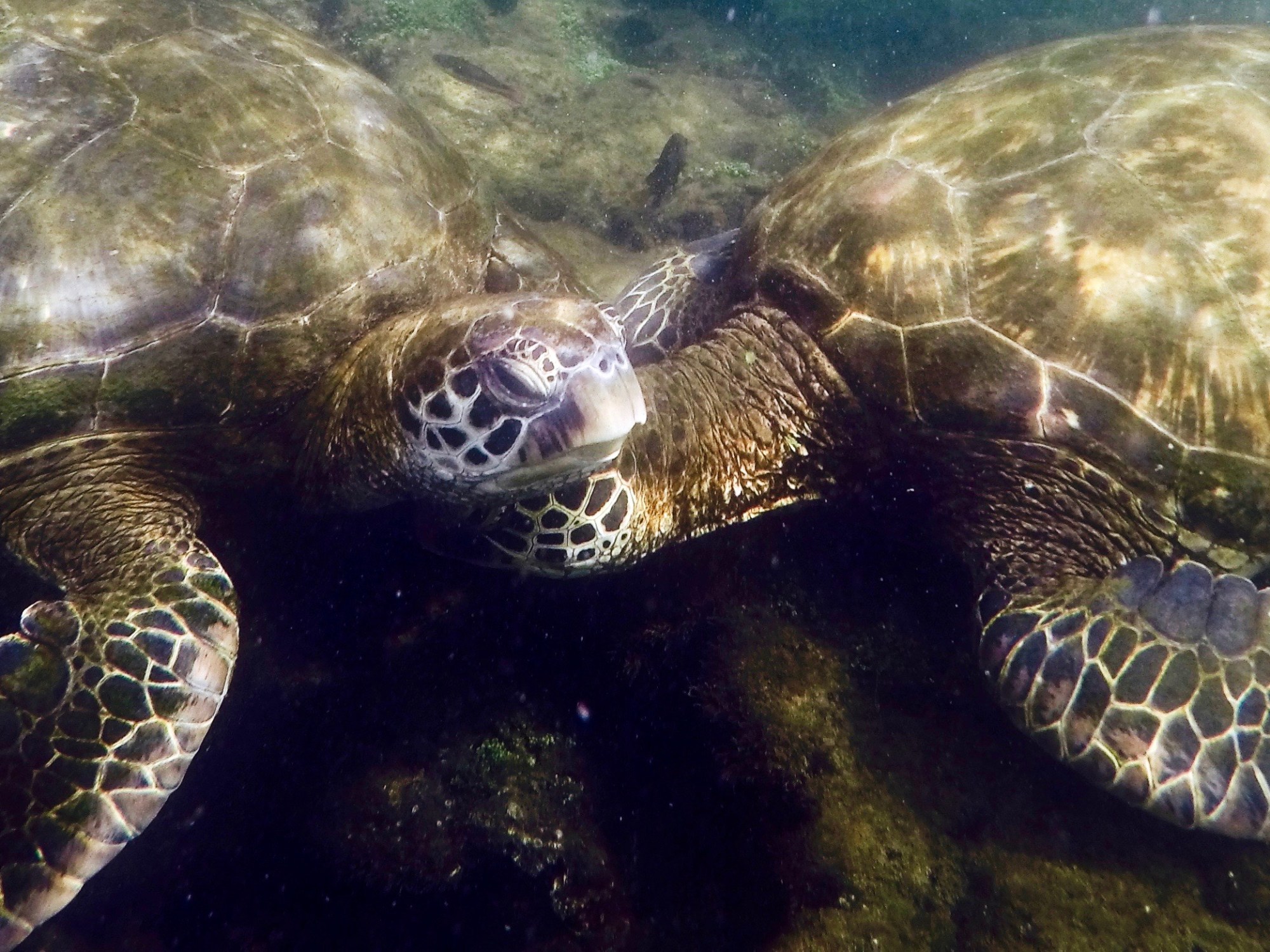
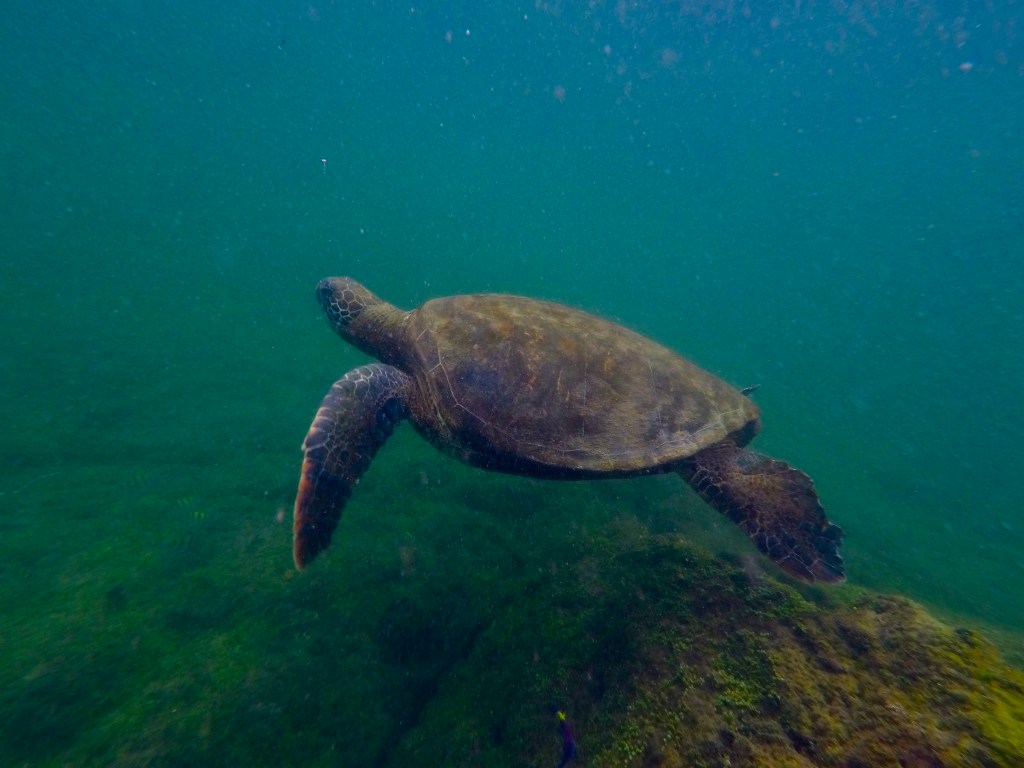
Green Sea Turtles are only found in certain places across the world, one of which being the GALAPAGOS!
They nest in the sand along Isabela’s beaches and can be spotted at night time if you’re taking a beach walk. Females lay their eggs at night after they crawl up the beach and dig a nest using their flippers. The eggs are incubated in the sand for around 45 days and the gender of the hatchlings depends on the temperature the eggs are kept at. If the temperature is hotter it will result in females.
All the eggs hatch at the same time and they run down the beach and into the ocean. Cormorants, frigate birds, crabs and all predators and will wait eagerly for the hatching of the turtles. Once they are in the water the frigates and also sharks will act as a risk for them. They will continue to be at risk until they are mature (26 years old!)
They are fast swimmers and I was really lucky to swim with them last week at the tunnels.
As with all turtles, Galapagos green turtles have an ingenious way to clean their bodies of salts; they are able to cry the excess salt in ‘tears’ from special glands underneath their eyes to keep a stable inner environment. They are fast swimmers, travelling at speeds up to 35 mph over long distances. They are even able to sleep underwater, but only for a few hours at a time. Stress affects the time they can spend underwater, so when fleeing a predator they can only stay submerged for a shorter period of time. This also explains why turtles drown relatively quickly when they are caught in fishing nets.
Its march and the pregnant females are often seen on the beaches waiting to lay their eggs – “fingers crossed” i will get to see them before I go.
 Georgia In The Jungle